AI-Driven Educational Data Management in UDISE Plus 2026-27
📋 Table of Contents (click to collapse)
- How Technology is Changing Education Data in India
- AI in UDISE Plus – What is Happening Now
- Automated Data Validation with AI
- How AI Helps Find Fake Students and Ghost Teachers
- Predictive Analytics for Education Planning
- AI-Powered APAAR ID and Aadhaar Integration
- Future of UDISE Plus with AI Technology
- What This Means for Schools and Teachers
- Frequently Asked Questions (FAQs)
How Technology is Changing Education Data in India
India has more than 14.7 lakh schools, 98 lakh teachers, and 23.5 crore students. Managing data for all of them every year is a huge task. Until a few years ago, school administrators managed this data mostly on paper - or at best, in simple Excel sheets.
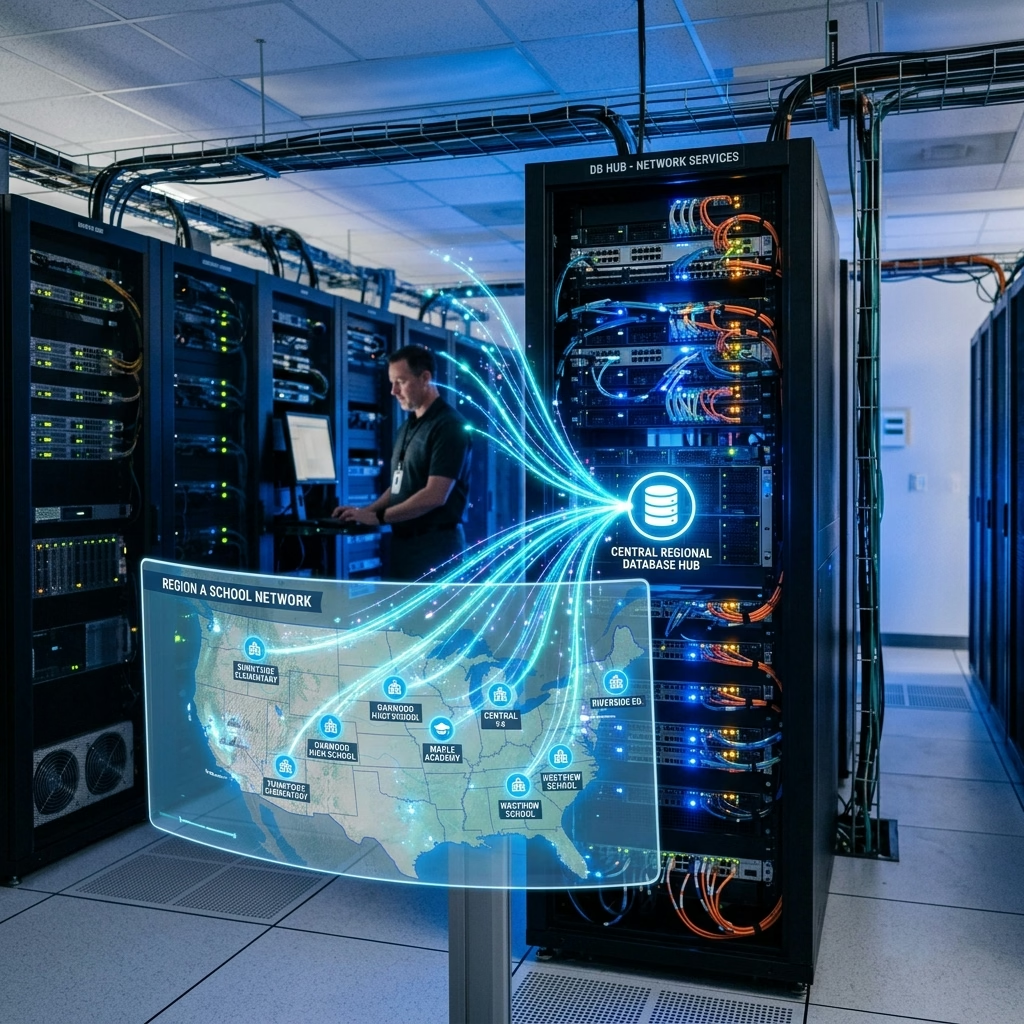
Today, UDISE Plus is using modern technology - including elements of Artificial Intelligence (AI) - to make education data management faster, smarter, and more accurate.
AI in UDISE Plus – What is Happening Now
While full AI integration is still developing, UDISE Plus already uses several smart technologies:
- Aadhaar authentication: Automatic identity verification for students (APAAR ID) and teachers (PEN)
- Data validation: Automatic checks that flag unusual or suspicious entries
- Duplicate detection: System alerts when the same Aadhaar or PEN appears in multiple schools
- Error flags: Automatic warnings when key data is missing or looks incorrect
- Report generation: System automatically calculates totals, percentages, and ratios from submitted data
Automated Data Validation with AI
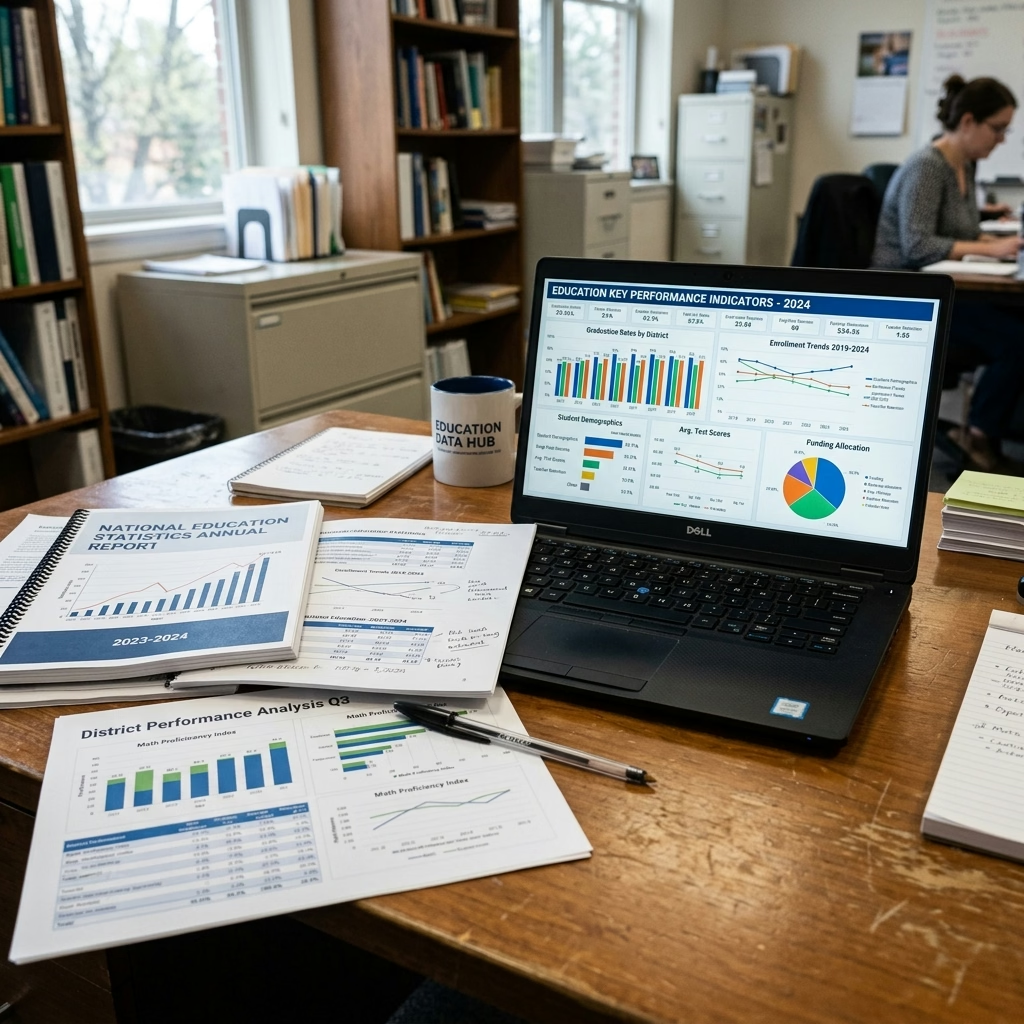
Automated validation means the system checks your data automatically. Here are examples:
| Data Entered | What AI Check Catches |
|---|---|
| Student age 35 in Class 1 | System flags this as an impossible/unlikely age for Class 1 |
| Girls\' toilets = 0 for a girls\' school | System flags this as a data gap that requires verification |
| Enrollment 0 in a school with 10 teachers | System flags this suspicious data for review |
| Same Aadhaar for two different students | System triggers a duplicate alert - you must correct one |
| Enrollment increase of 500% in one year | System flags this unusual jump for verification |
How AI Helps Find Fake Students and Ghost Teachers
In the past, some schools had "ghost students" - fake entries to get more government funding for books, meals, and grants. Similarly, some districts had "ghost teachers" - people on the payroll who didn't actually teach.
UDISE Plus technology addresses this through:
- APAAR ID + Aadhaar: Every student must have a real Aadhaar. A fake student cannot have a real Aadhaar ID.
- PEN + Aadhaar for teachers: Every teacher needs Aadhaar authentication to get a PEN number.
- Cross-database verification: Government systems cross-check UDISE+ data with Aadhaar, pension, and salary databases.
- Anomaly detection: If a school suddenly shows 200 new students in one year, the system flags it for inspection.
Predictive Analytics for Education Planning
Predictive analytics means using past data to predict what schools will need in the future:
- If District X has been growing enrollment by 3% per year for 5 years → the system predicts a need for 3% more teachers next year
- If a block has high dropout rates in Class 6 → government can focus special schemes there
- If computer labs are missing in most schools of a district → the government should allocate the digital education budget there
- Flash Statistics trends help Ministry plan national education budgets
AI-Powered APAAR ID and Aadhaar Integration
AI-backed Aadhaar integration powers the APAAR ID system:
- School enters student's Aadhaar in SDMS
- System sends verification request to Aadhaar database (UIDAI)
- AI cross-checks name, DOB, and gender
- If all details match, the system generates the APAAR ID automatically
- If the system detects a duplicate (same Aadhaar in two schools), it alerts both schools
Future of UDISE Plus with AI Technology
In the coming years, we expect UDISE Plus to include:
- Smart dashboards: Real-time data quality scores for schools and districts
- Natural Language Processing: Ask questions in Hindi or English and get instant data answers
- Automated reminders: AI sends alerts to schools that have not submitted data close to the deadline
- Digital attendance integration: Attendance data directly feeds into UDISE+ from smart attendance systems
- Results integration: Linking exam results to APAAR ID updates academic records automatically
What This Means for Schools and Teachers
For school staff, AI in UDISE Plus means:
- Fewer errors: The system catches mistakes before submission, which means you need to make fewer corrections later
- Faster verification: Aadhaar-based authentication is instant - no manual paperwork
- Better reporting: The system generates reports automatically with correct calculations
- Less fraud risk: Proper verification protects honest schools, so the government does not compare them unfairly with schools that inflated data
- More resources: Accurate data helps the government allocate correct resources, such as books, teachers, and grants
Udise Plus Student (SDMS) Login Module (State Wise)
❓ Frequently Asked Questions (FAQs)
Here are the most common questions people ask about AI-Driven Educational Data Management in UDISE Plus 2026-27.
✅ Conclusion
AI and technology make the UDISE Plus system smarter, faster, and more accurate. Automated data validation catches errors before they become problems. Predictive analytics help governments plan education budgets better. Linking the APAAR ID with Aadhaar ensures every student has a real, verified identity. For schools and teachers, this means less paperwork, fewer data entry errors, and more time for actual teaching. The future of Indian education data management is digital, automated, and AI-powered.